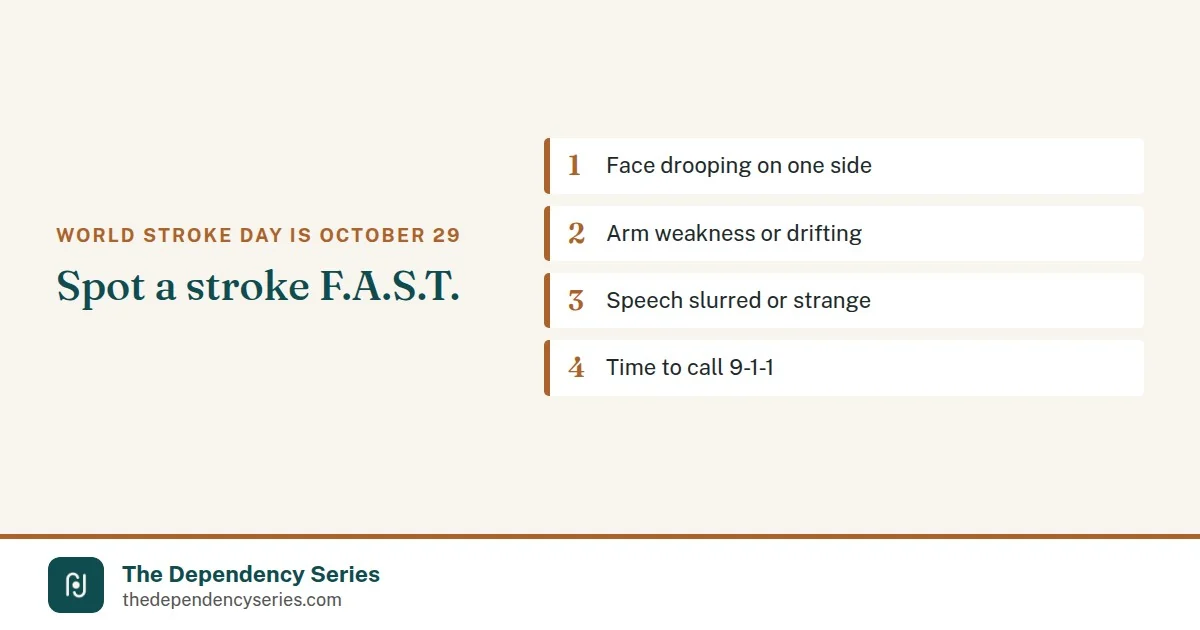
- F.A.S.T. stands for Face drooping, Arm weakness, Speech difficulty and Time to call 9-1-1 (CDC).
- BE FAST adds sudden loss of Balance and Eye (vision) changes.
- A mini-stroke (TIA) that goes away is still an emergency: stroke risk is highest in the next 48 hours (American Stroke Association).
- Note the time symptoms started. Clot-busting treatment is time-limited.
The signs, in plain words
The American Stroke Association teaches F.A.S.T., and the CDC lists the same core signs:
- F, Face drooping: ask the person to smile. Does one side droop?
- A, Arm weakness: ask them to raise both arms. Does one drift down?
- S, Speech difficulty: is speech slurred, strange or hard to understand?
- T, Time to call 9-1-1: don’t wait to see if it passes.
Some hospitals teach BE FAST, which adds two signs at the front: sudden loss of Balance and sudden Eye changes, such as blurred, double or lost vision. Other sudden signs include numbness on one side of the body, confusion, and a severe headache with no known cause.
Why minutes matter
A stroke happens when a clot blocks blood flow to part of the brain or a blood vessel bursts. Brain cells in the affected area begin to die within minutes, which is why stroke teams say "time is brain." Patients who reach the emergency room within three hours of their first symptoms often have less disability three months later than those whose care is delayed.
Treatment has improved quickly. The 2026 AHA/ASA guideline recommends clot-busting medication within 4.5 hours of symptom onset for eligible patients, and extends clot-removal procedures to selected patients up to 24 hours after symptoms begin. Both options depend on getting to the right hospital fast.
What to do in the first hour
- Call 9-1-1. An ambulance crew can alert the stroke team and take the person to a stroke-ready hospital. Don’t drive them yourself unless there’s no other option.
- Note the time. Write down when symptoms started, or the last time the person was seen normal. Doctors use this to decide which treatments are possible.
- Gather the medication list, especially any blood thinner. Keeping a current list in a wallet or phone saves time.
- Don’t give food, drink or aspirin unless a dispatcher or doctor tells you to. Some strokes are caused by bleeding.
- Stay with them and tell the crew about any recent falls or head injuries.
When the symptoms go away
A transient ischemic attack (TIA), often called a mini-stroke, causes the same signs but clears up, usually within minutes. It is not a "near miss." The American Stroke Association treats it as a warning: the risk of a full stroke is highest in the next 48 hours, and same-day treatment sharply lowers it. Call 9-1-1 even if the person feels fine again.
After the emergency
Stroke is the condition most likely to change a family’s care needs overnight. More than 795,000 Americans have a stroke each year, about one every 40 seconds, and nearly 1 in 4 are repeat strokes (CDC). If someone you love has had a stroke, our post on the first 90 days after a stroke explains rehab choices, and the full Stroke, CVA and TBI guide covers recovery, prevention of a second stroke and planning for care.
This article is educational information only, not medical advice. If you think someone is having a stroke, call 9-1-1.
Common Questions
What does F.A.S.T. stand for?
Face drooping, Arm weakness, Speech difficulty and Time to call 9-1-1. BE FAST adds sudden loss of Balance and Eye or vision changes.
Should I call 9-1-1 if the stroke symptoms go away?
Yes. Symptoms that go away may be a transient ischemic attack (TIA). The risk of a full stroke is highest in the next 48 hours, and same-day emergency evaluation sharply lowers it.
Why should I note the time stroke symptoms started?
Clot-busting medication and clot-removal procedures are only offered within certain time windows. The time symptoms started, or the last time the person was seen normal, helps doctors decide which treatments are possible.
Should I give aspirin to someone having a stroke?
Not unless a 9-1-1 dispatcher or doctor tells you to. Some strokes are caused by bleeding in the brain, and aspirin can make those worse.
Topics in This Post
Educational content only, not medical, legal or financial advice. Talk with a qualified clinician about your own situation. Sources for this post (all accessed October 2026):
Comments and Discussion
Loading comments...
Comments are moderated. By posting you acknowledge our Terms of Use, including the educational-content disclaimer, AI research disclosure, and hold harmless acknowledgement.