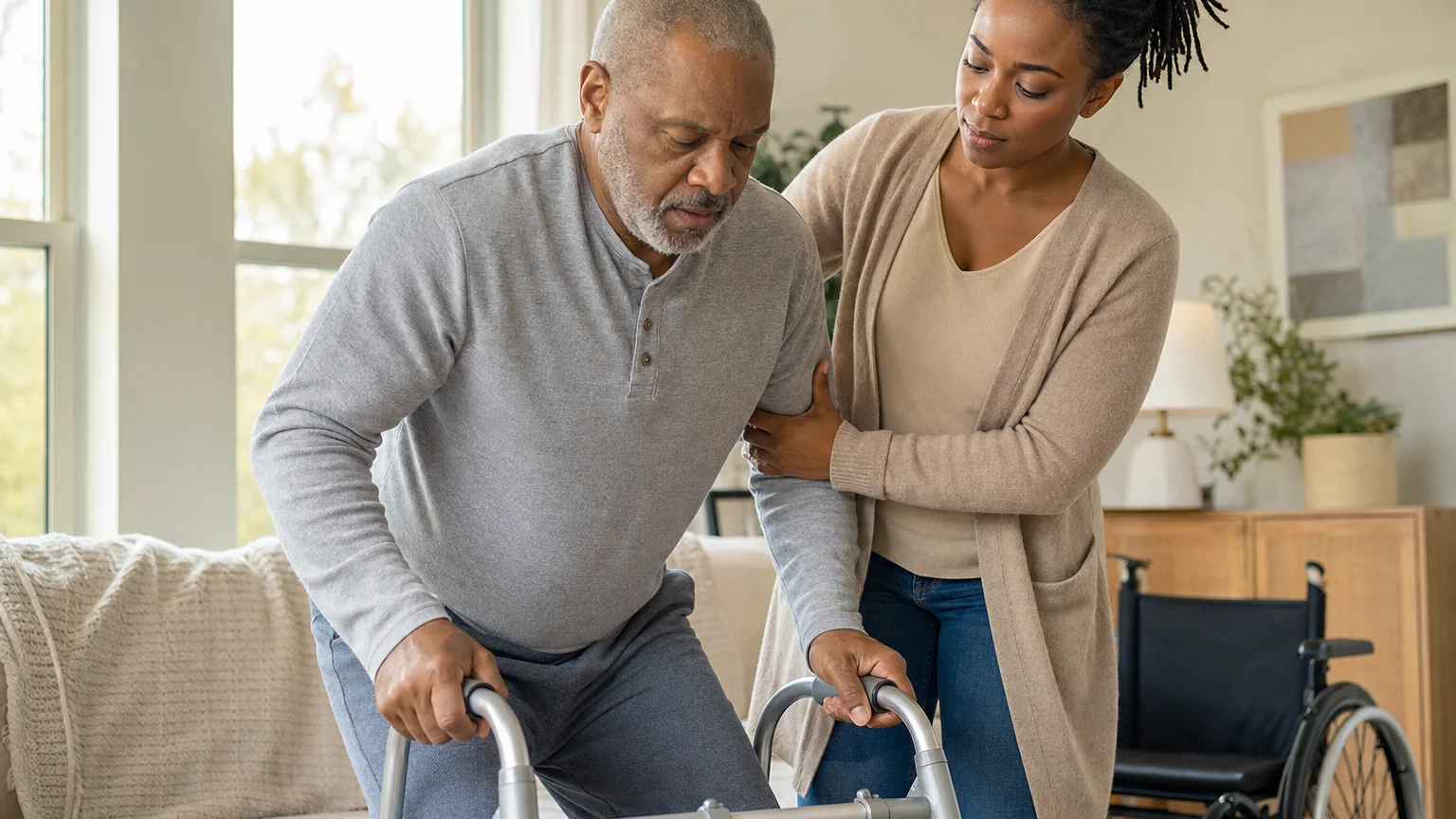
- Stroke is the leading cause of long-term adult disability in the United States, and about 795,000 Americans have one each year.
- The first six months are the most intense recovery window, making the first 90 days an important time for therapy, safety, and realistic planning.
- About two in three survivors are left with permanent disability, but early weeks do not tell the whole story; recovery paths vary widely.
- Families should prepare for changing needs: mobility and self-care help, speech or swallowing support, medication management, and supervision may all be needed.
Overview: The First 90 Days Are a Bridge, Not a Verdict
A stroke can change a family’s daily life in hours. It is a sudden interruption of blood supply to the brain, and it can leave a previously independent person needing help to walk, communicate, eat, bathe, dress, or manage medications. That speed is what makes the first days feel so disorienting.
But the first 90 days should not be read as a final verdict. The pillar page for this series describes the first six months as the most intense recovery window, when therapy is frequent and supervision is often needed. The job in the first three months is to support recovery while learning what kind of help is truly needed now.
The First Hours and Hospital Phase: Protecting Brain and Function
The first phase is about emergency treatment and quick decisions. “Time is brain” is not just a slogan: the stroke pillar notes that every minute of delay destroys about 1.9 million additional neurons. The classic F.A.S.T. signs—face drooping, arm weakness, speech difficulty, and time to call emergency services—matter because treatment speed can change the long-term result.
In the emergency department, rapid brain imaging helps determine whether the stroke was caused by a blockage or bleeding and which treatment may be appropriate. Ischemic strokes make up 87% of cases. Hemorrhagic strokes are less common but more often fatal. Families do not need to master every term in the hospital; they do need to ask what functions were affected and what comes next.
Early conversations often focus on movement, speech, swallowing, alertness, and the ability to manage basic activities. Those observations help the team plan the next setting of care. A person may need physical therapy for mobility and transfers, occupational therapy for daily tasks, or speech therapy for communication and swallowing.
Days and Weeks After: Rehabilitation Becomes the Work
Once the immediate emergency is past, recovery becomes more practical. Rehabilitation may happen in a rehabilitation facility, at home, or through outpatient services, depending on the person’s needs. The goal is not simply to “get stronger.” It is to rebuild as much safe function as possible in the tasks that make independence possible.
That often means practicing how to stand, move between a bed and chair, get dressed, bathe, use the bathroom, eat safely, communicate needs, and take medications correctly. Some survivors need help with all six core activities of daily living during the first months. Others need targeted support in only one or two areas. Both can be difficult adjustments for a family.
The right question is not “Will they be back to normal by next week?” It is “What can they safely do today, and what support makes the next step possible?” Small gains can matter: safer transfers, fewer missed medications, clearer communication, or a little more endurance during self-care.
The Outpatient Window: Making Therapy Fit Real Life
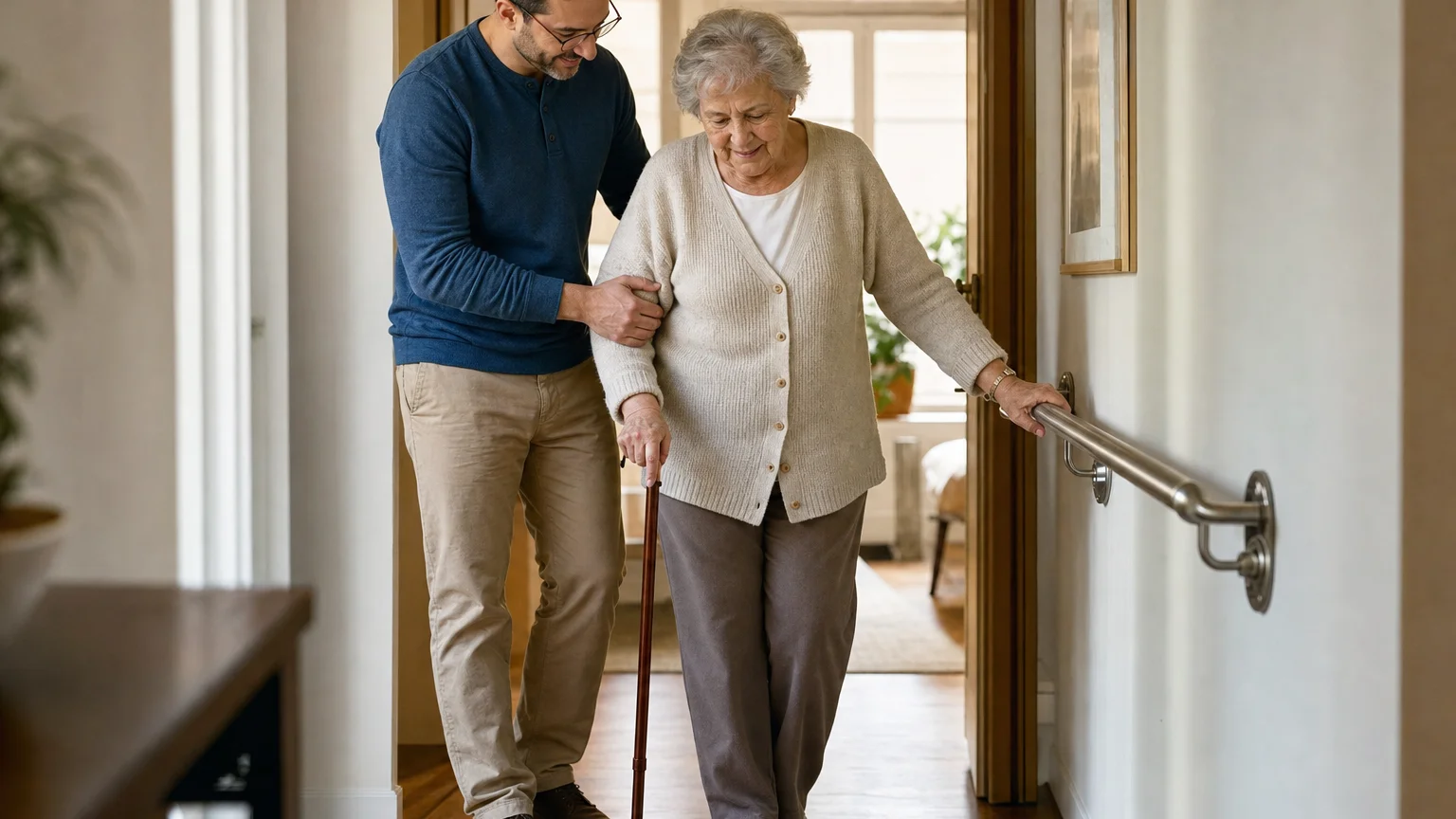
As care shifts away from the hospital or a rehabilitation facility, families often discover that recovery has a second layer: getting through ordinary days safely. Outpatient therapy can be central during this period, but progress also depends on how well the home routine supports it.
The stroke pillar advises an early occupational-therapy home-safety assessment. This can identify changes such as grab bars, ramps, and shower benches before a fall adds another crisis to recovery. It is also a chance to ask direct questions about transfers, stairs, bathing, and whether the current layout is workable.
Planning needs to leave room for uncertainty. Recovery trajectories vary widely. It is too early in the first weeks to assume full recovery, and it is just as unhelpful to assume permanent disability. Build the next plan around the help that is needed now, then revisit it as function changes.
What Most Affects Whether Independence Returns
Stroke recovery is shaped by what parts of the brain were affected, how quickly treatment occurred, and the type and severity of disability left afterward. The Modified Rankin Scale is one tool clinicians use to describe that range, from no symptoms to severe disability requiring constant nursing care.
For families, the most visible measure is usually day-to-day function. Can the person move safely? Can they dress and bathe with less help? Can they express pain or needs? Can they manage medications? These are the questions that determine whether home can remain safe and what support will be needed.
Caregiving time can be substantial. The stroke pillar reports a typical commitment of 27 to 49 hours a week for stroke caregivers. Naming that load early is important. It helps families share tasks, plan work schedules, and recognize that constant lifting or supervision cannot simply be added to an already full life without support.
Caring for someone with this condition?
Two quick, private check-ins — pick the one that fits what you want to look at.
Not sure which to start with? If caregiving is wearing on you emotionally, start with the Burnout Check-In. If you want to see the time, money, and support behind it, start with the Load Check-In.
See how caregiving is affecting you emotionally — exhaustion, resentment, feeling overwhelmed.
Take the Caregiver Burnout Check-In →See how much time, money, and support caregiving is actually taking from your life — plus a rough estimate of what it adds up to per year, now built right into this check-in.
Take the Caregiver Load Check-In →The Burnout Check-In measures how caregiving is affecting you emotionally. The Load Check-In measures what it's costing you in hours, dollars, and support. They look at different things — many caregivers find it useful to take both.
Three Practical Priorities for the First 90 Days
- Keep the care plan visible. Write down therapy appointments, medication changes, questions for clinicians, and what help is needed for bathing, transfers, meals, and communication.
- Make safety a treatment goal. Ask for a home-safety assessment and address hazards before a fall compounds the recovery.
- Plan in short intervals. Reassess needs as therapy and function change instead of making a permanent living decision based only on the first difficult week.
- Review long-term care coverage early. If a long-term care insurance (LTC) policy is already in place, understanding its benefit triggers and covered care settings before they're needed removes one variable from a stressful week; if no policy exists, the first 90 days is when many families first estimate what long-term care could cost.
Frequently Asked Questions
What is the most important thing to do when stroke symptoms start?
Call emergency services immediately when sudden facial drooping, arm weakness, or speech difficulty appears. The stroke pillar emphasizes that time is brain: treatment speed is a major determinant of outcome.
How long is the most intense stroke recovery period?
The first six months after a stroke are described as the most intense recovery window, with frequent therapy and often round-the-clock supervision. The first 90 days sit inside that window.
Will a stroke survivor regain independence?
It varies widely. About two in three stroke survivors are left with permanent disability, but families should not assume either full recovery or permanent disability in the first weeks after a stroke.
What help might be needed after a stroke?
Common needs include physical therapy for mobility and transfers, occupational therapy for self-care tasks, speech therapy for communication and swallowing, medication help, and supervision. Needs depend on the brain areas affected and the speed of treatment.
Key sources for this post include:
Discussion
Loading comments...
Comments are moderated. By posting you acknowledge our Terms of Use, including the educational-content disclaimer, AI research disclosure, and hold harmless acknowledgement.