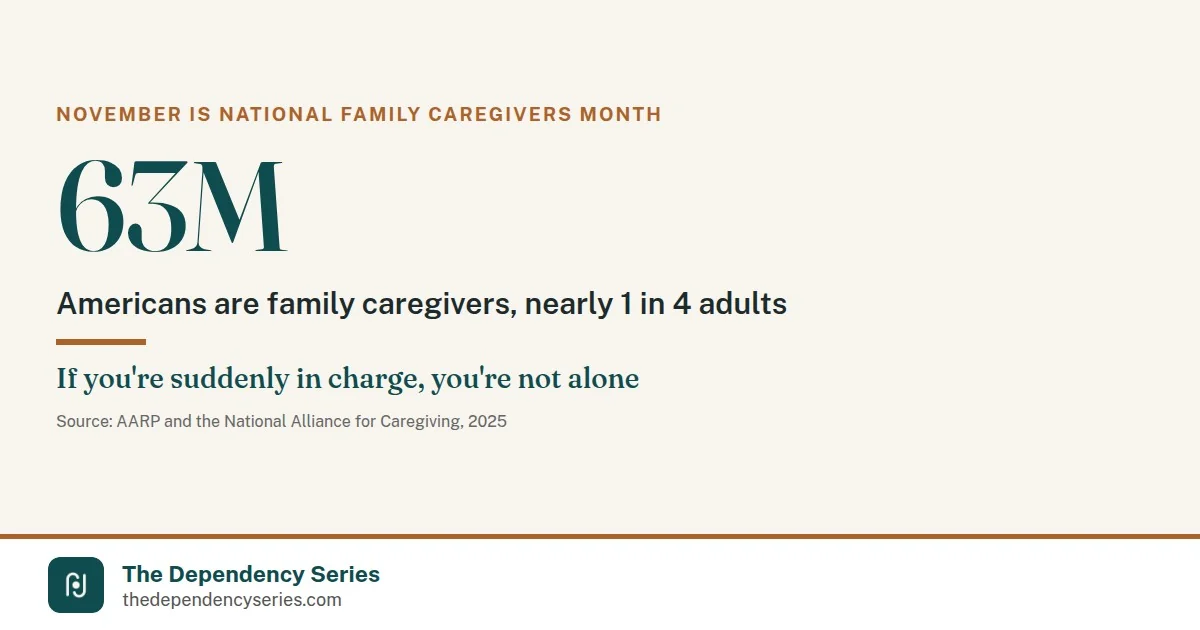
- 63 million Americans, nearly 1 in 4 adults, are family caregivers (AARP and NAC).
- First week priorities: the diagnosis in writing, a medication list, key documents and a safe plan for home.
- Medicare doesn’t pay for ongoing custodial care, so ask early how care will be paid for (Medicare.gov).
- The free Eldercare Locator connects you to local help.
You’re not alone
According to Caregiving in the US from AARP and the National Alliance for Caregiving, 63 million Americans, nearly 1 in 4 adults, are family caregivers, and nearly 1 in 4 of them provide 40 or more hours of care a week. Most started without a plan. Here is where to begin.
Day 1 to 2: understand the situation
- Get the diagnosis in writing and ask what to expect over the next few months.
- Ask who your main contact is at the hospital or doctor’s office, and how to reach them after hours.
- Write down the activities of daily living your loved one now needs help with: bathing, dressing, eating, toileting, moving from a bed to a chair, and continence. Our ADL guide explains why this list matters.
Day 3 to 4: medicines and documents
- Make one complete medication list: name, dose, time and prescribing doctor. Bring it to every appointment.
- Find the key documents: insurance cards, Medicare and supplemental coverage, any long-term care insurance policy, and a will.
- Check for a durable power of attorney and a health care proxy. If they don’t exist and your loved one can still make decisions, talk to an elder law attorney soon.
Day 5 to 6: home and help
- Walk through the home for fall risks: loose rugs, poor lighting, stairs and the bathroom. A shower chair and grab bars are inexpensive and effective.
- Ask about home health. Medicare covers some skilled home health care when a doctor orders it and the person meets the rules.
- Know where Medicare stops. Medicare.gov is clear that it doesn’t pay for long-term custodial care, the everyday help many people need. Ask early how ongoing care will be paid for. Our sister site FundingDependency.com explains the options.
Day 7: take care of yourself
- Ask for specific help from family and friends: a ride, a meal, two hours on Saturday.
- Find local support. The free Eldercare Locator connects you to your Area Agency on Aging, respite care and caregiver programs. The ACL caregiver support page lists national programs.
- Track your own load. Our free Caregiver Load Check takes a few minutes and shows when it may be time to add help.
The next step
Our You’re Suddenly in Charge. Now What? page walks first-time caregivers through the next steps and points to the right condition guide.
Thank you to every caregiver reading this. This article is educational information only, not medical, legal or financial advice.
Common Questions
What should a new caregiver do first?
Get the diagnosis and care plan in writing, make one complete medication list, find key insurance and legal documents, check the home for fall risks, and ask how ongoing care will be paid for.
How many Americans are family caregivers?
About 63 million Americans, nearly 1 in 4 adults, are family caregivers, according to AARP and the National Alliance for Caregiving.
Does Medicare pay for a caregiver at home?
Medicare covers some part-time skilled home health care when a doctor orders it and the person meets the rules. It doesn’t pay for ongoing custodial care such as help with bathing and dressing.
Where can caregivers find local help?
The free Eldercare Locator connects caregivers to their local Area Agency on Aging, respite care and support programs.
Topics in This Post
Educational content only, not medical, legal or financial advice. Talk with a qualified clinician about your own situation. Sources for this post (all accessed October 2026):
Comments and Discussion
Loading comments...
Comments are moderated. By posting you acknowledge our Terms of Use, including the educational-content disclaimer, AI research disclosure, and hold harmless acknowledgement.