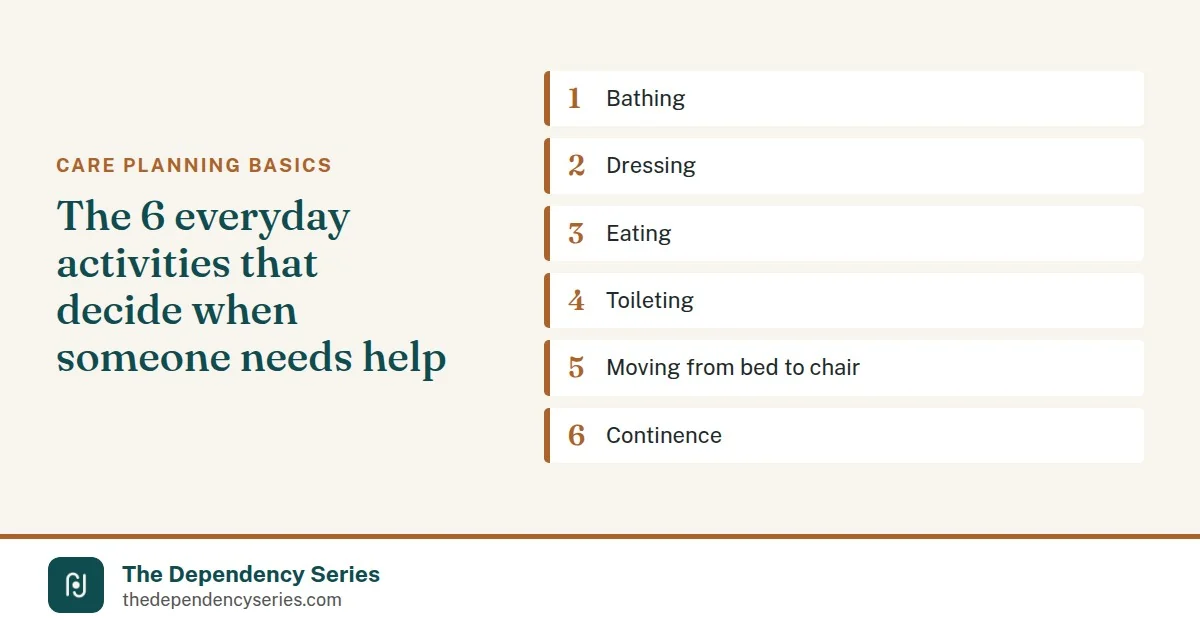
- The six activities of daily living (ADLs) are bathing, dressing, eating, toileting, transferring and continence.
- Needing help with two or more ADLs, or having a severe cognitive impairment, is the usual trigger for long-term care insurance benefits.
- Changes in more complex tasks, such as managing money or medications, often show up first.
- Medicare generally doesn’t pay for help with ADLs, which is called custodial care (Medicare.gov).
What the six ADLs are
Activities of daily living are the basic self-care tasks a person needs to manage to live independently. The standard list has six:
- Bathing: getting in and out of a tub or shower and washing safely.
- Dressing: choosing clothes and putting them on and taking them off, including fasteners and shoes.
- Eating: getting food from the plate to the mouth. Cooking is a separate, more complex task.
- Toileting: getting to and from the toilet, using it and cleaning up.
- Transferring: moving in and out of a bed or chair.
- Continence: controlling bladder and bowel function, or managing supplies when control is limited.
The HHS Administration for Community Living describes long-term care in exactly these terms: help with everyday personal care that a person can no longer do alone.
Why the list matters so much
The ADLs are a shared language. A nurse doing an assessment, a long-term care insurer reviewing a claim and a Medicaid program deciding on nursing home level of care all ask the same question: which of these tasks can the person do without help, which need some help, and which can’t they do at all?
For long-term care insurance, the usual benefit trigger is the inability to perform two or more of the six ADLs without substantial assistance, or a severe cognitive impairment that requires supervision for safety. The NAIC Shopper’s Guide explains how policies define these triggers, and tax-qualified policies generally also require that the need be expected to last at least 90 days.
The tasks that slip first
Families rarely see an ADL change first. More often they notice trouble with the instrumental activities of daily living, or IADLs: managing money, preparing meals, keeping track of medications, shopping, housekeeping, using the phone and getting to appointments. Unpaid bills, an empty refrigerator or a pill organizer that hasn’t been touched are often the earliest signs that someone needs more support. Our glossary explains how IADL changes often come before ADL changes.
How to describe changes to a doctor
Clear, specific observations help a clinician far more than a general worry. Try writing down:
- Which task is affected, using the ADL or IADL name.
- How much help is needed: a reminder, someone standing by, or hands-on help.
- When it started and whether it is getting worse.
- What happened around the same time, such as a fall, an illness or a medication change.
For example, "Since her hospital stay in September, Mom needs someone standing by when she gets in and out of the shower" is something a doctor, therapist or care manager can act on.
Who pays for help with ADLs
Help with ADLs is called custodial care, and it is the kind of care most people need for the longest time. Medicare.gov is direct that Medicare and most health insurance don’t pay for long-term custodial care. Families usually pay with their own savings, long-term care insurance, VA benefits for eligible veterans, or Medicaid once they qualify (Medicaid.gov). Someone turning 65 today has almost a 70% chance of needing some type of long-term care (ACL), so the list is worth knowing well before it applies to anyone you love.
Common Questions
What are the six activities of daily living?
Bathing, dressing, eating, toileting, transferring (moving in and out of a bed or chair) and continence. They are the basic self-care tasks used to measure a person’s independence.
How many ADLs do you need help with to qualify for long-term care insurance benefits?
Most policies pay when a person can’t perform two or more of the six ADLs without substantial help, or has a severe cognitive impairment that requires supervision. Tax-qualified policies generally also require that the need be expected to last at least 90 days. Check the exact definition in your policy.
What is the difference between ADLs and IADLs?
ADLs are basic self-care tasks such as bathing and dressing. IADLs are more complex tasks needed to live independently, such as managing money, cooking, shopping and keeping track of medications. IADL changes often appear first.
Does Medicare pay for help with activities of daily living?
Generally no. Help with ADLs is custodial care, and Medicare and most health insurance don’t pay for long-term custodial care at home or in a nursing home.
Topics in This Post
Educational content only, not medical, legal or financial advice. Talk with a qualified clinician about your own situation. Sources for this post (all accessed October 2026):
Comments and Discussion
Loading comments...
Comments are moderated. By posting you acknowledge our Terms of Use, including the educational-content disclaimer, AI research disclosure, and hold harmless acknowledgement.