- Dementia is a category of diseases, not one disease. Alzheimer’s is the most common form.
- An estimated 7.4 million Americans age 65 and older have Alzheimer’s dementia in 2026 (Alzheimer’s Association).
- Lewy body dementia often affects attention and vision before memory; frontotemporal dementia often changes behavior or language first and is the leading cause of dementia under 65.
- Many people in later stages have mixed dementia, more than one disease at once.
Dementia is a category, not a diagnosis
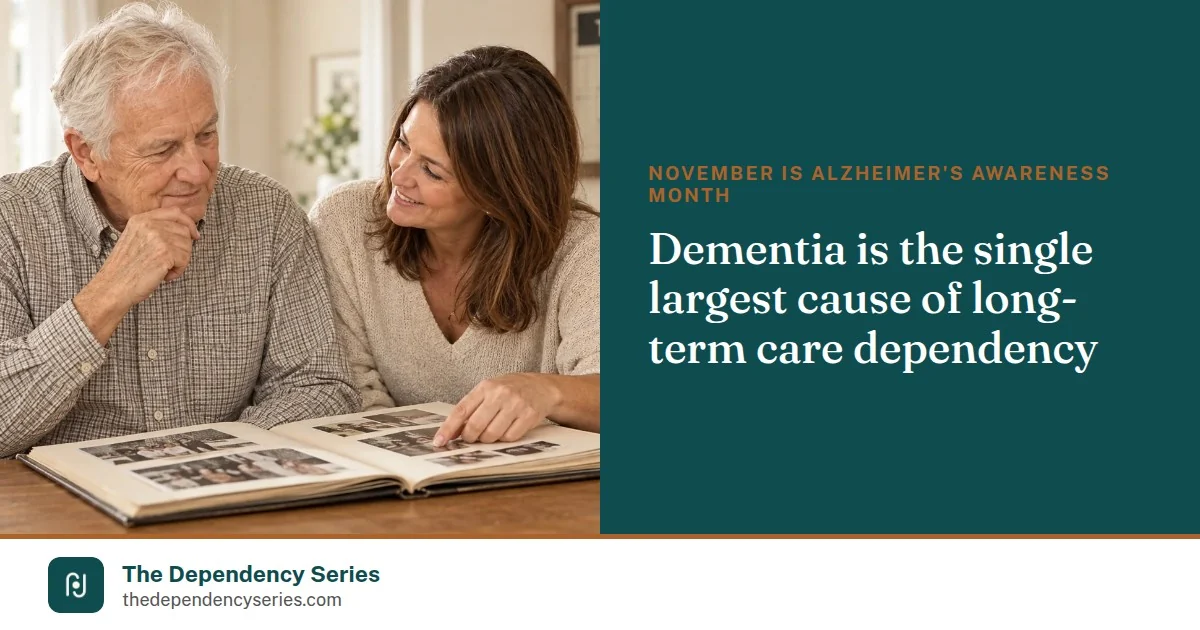
Dementia describes a group of progressive brain diseases that affect memory, judgment, language and the ability to live independently. Together they are the single largest cause of long-term care dependency in the United States. The Alzheimer’s Association estimates that 7.4 million Americans age 65 and older are living with Alzheimer’s dementia in 2026, and dementia will cost the country $409 billion this year.
The five main types
Alzheimer’s disease
The most common form. It usually begins with trouble remembering recent conversations or events, then gradually affects reasoning, language and daily tasks. The 10 warning signs include memory loss that disrupts daily life, trouble planning, losing track of dates and withdrawing from activities.
Lewy body dementia
Caused by abnormal protein deposits called Lewy bodies, the same protein involved in Parkinson’s disease. It accounts for about 5 to 10% of cases. It tends to affect attention, alertness and visual processing before memory, and can cause vivid visual hallucinations, movement problems and large day-to-day swings in alertness.
Vascular dementia
Caused by reduced blood flow to the brain, often from strokes, including small "silent" ones. It can progress in steps rather than a steady decline, and early problems are often with planning, focus and speed of thinking rather than memory. Preventing strokes is one of the best ways to protect against it.
Frontotemporal dementia
About 3% of dementia overall, but the leading cause of dementia under age 65. It affects the front and side areas of the brain, so the first signs are often changes in personality, behavior, judgment or language rather than memory. Families sometimes mistake it for a mental health problem or a midlife crisis.
Mixed dementia
More than one disease at the same time, most often Alzheimer’s with vascular changes. Most people in advanced stages have some mixed pathology.
Why the type matters
- Treatment: some medicines help one type and can harm another. People with Lewy body dementia, for example, can react badly to certain antipsychotic drugs.
- Safety: early behavior changes in frontotemporal dementia, or hallucinations and falls in Lewy body dementia, call for different supervision.
- Planning: the pace and pattern of decline affect when help at home, memory care or legal planning is needed. Legal documents need to be signed while the person can still understand them.
New blood tests are also changing how early Alzheimer’s can be identified. The FDA cleared the first blood test used in diagnosing Alzheimer’s in 2025. Our post on Alzheimer’s blood tests and the APOE4 gene explains what they can and can’t tell you.
Where to start
If you notice changes, start with a doctor’s visit and bring written examples. Part 1 of The Dependency Series, the free Organic Brain Syndrome and dementia white paper, covers each type, early signs, Medicare coverage and planning in depth.
This article is educational information only, not medical advice.
Common Questions
What is the difference between Alzheimer's and dementia?
Dementia is a general term for a group of brain diseases that affect memory, thinking and daily function. Alzheimer’s disease is the most common type of dementia.
What are the main types of dementia?
Alzheimer’s disease, Lewy body dementia, vascular dementia, frontotemporal dementia and mixed dementia, which is more than one type at the same time.
What is the most common dementia in people under 65?
Frontotemporal dementia is the leading cause of dementia under age 65. Its early signs are often changes in behavior, personality or language rather than memory.
Why does the type of dementia matter?
The type affects which treatments are safe and helpful, what safety risks to watch for, and how quickly care needs are likely to grow.
Topics in This Post
Educational content only, not medical, legal or financial advice. Talk with a qualified clinician about your own situation. Sources for this post (all accessed October 2026):
Comments and Discussion
Loading comments...
Comments are moderated. By posting you acknowledge our Terms of Use, including the educational-content disclaimer, AI research disclosure, and hold harmless acknowledgement.